What Is Kozhambu? A Guide to the South Indian Dish Full of Regional Flavour
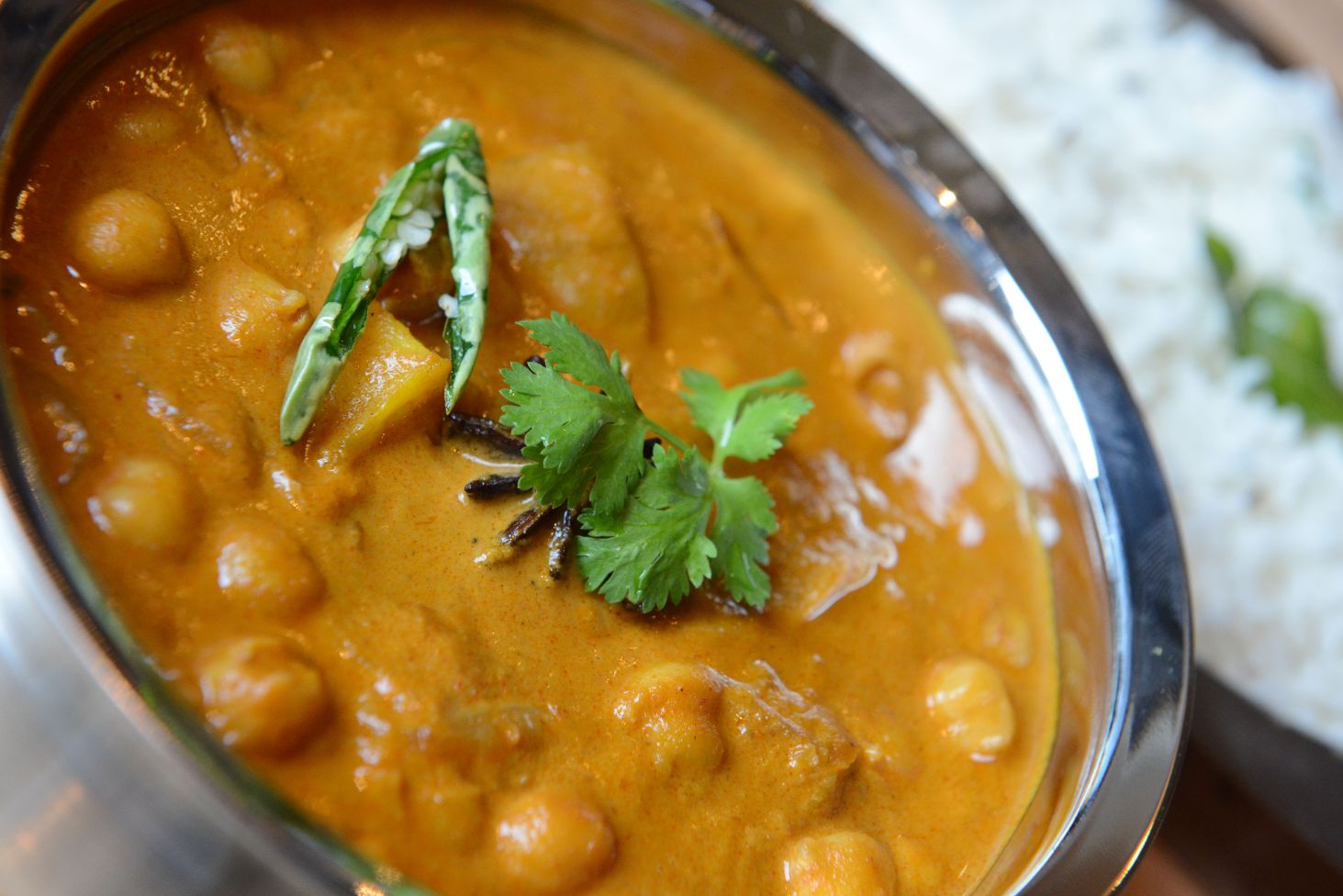
Ever looked at a South Indian menu and wondered what Kozhambu actually is? You're certainly not alone. It might be an unfamiliar name to many British diners, but in Tamil households, Kozhambu is everyday comfort food.
Imagine coming home to a plate of warm rice, a generous serving of aromatic curry and something crispy on the side. Simple, satisfying and full of flavour. That's the kind of meal Kozhambu is made for.
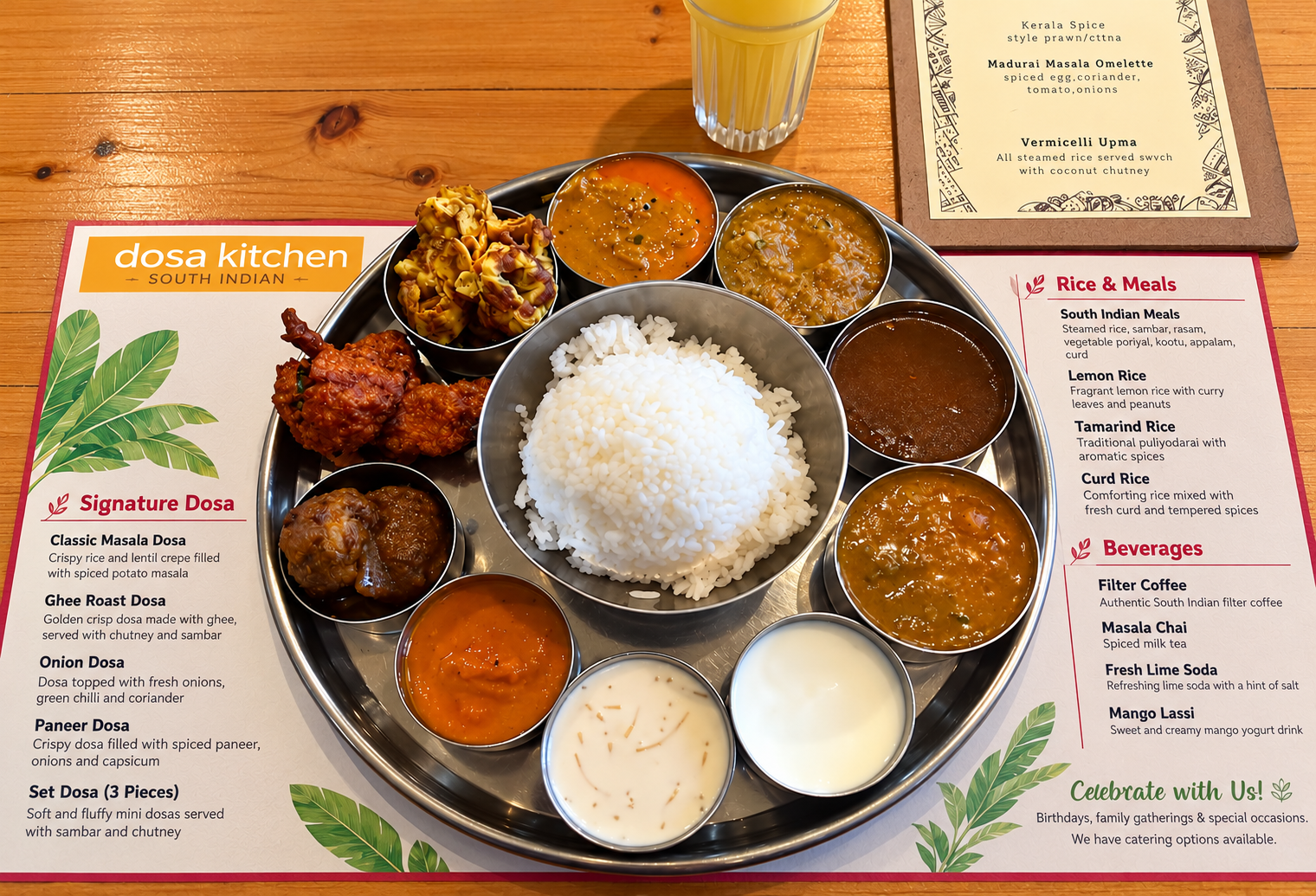
At Dosa Kitchen in Jesmond, Newcastle upon Tyne, traditional dishes such as Ammachi Lamb Kozhambu, Cauliflower Kozhambu and Prawn Thengapal Kozhambu introduce diners to different sides of South Indian cooking.
Whether you're discovering regional Indian food for the first time or searching for an Indian restaurant Newcastle diners can visit for authentic South Indian flavours, here's what makes Kozhambu worth knowing about.
What Exactly Is Kozhambu?
Kozhambu, also written as Kuzhambu, is a traditional South Indian gravy-based dish, particularly associated with Tamil Nadu.
It isn't one specific recipe. Think of it as a family of curries, each with its own ingredients, seasoning and regional character.
Some versions are tangy, others are rich and spicy. Certain recipes use tamarind, while others feature coconut, vegetables, lentils, fish or meat.
The consistency varies too. One household might prepare a thinner Kozhambu for mixing with rice, while another prefers a thicker gravy.
That's part of its charm. There isn't just one way to make it.
Why Kozhambu Is So Important in South Indian Cooking
In many Tamil homes, lunch wouldn't feel quite complete without something flavourful to mix into rice.
Kozhambu often fills that role.
It brings together ingredients that are familiar in South Indian kitchens, with seasoning that can turn a simple plate of rice into a deeply satisfying meal.
More importantly, Kozhambu carries a sense of home.
Recipes are often passed between generations. One grandmother might favour a sharp tamarind flavour, while another uses a different spice combination.
Even when two families prepare the same variety, the results can taste surprisingly different.
Different Types of Kozhambu You Should Know
Puli Kozhambu – Tangy and Full of Character
Puli means tamarind in Tamil, and this variety is known for its distinctive tanginess.
Vegetables such as brinjal or drumstick are commonly used, alongside spices that balance the sour notes.
It's particularly enjoyable with steamed rice.
Vatha Kozhambu – A Traditional Tamil Favourite
Vatha Kozhambu is another tamarind-based preparation, often featuring dried ingredients such as sundakkai (turkey berries).
Its concentrated flavour makes it a familiar favourite in Tamil home cooking.
Vegetable Kozhambu – Everyday Comfort
Vegetarian Kozhambu can feature cauliflower, brinjal, okra or other vegetables.
Different preparations bring out different textures, making this a versatile part of South Indian cuisine.
Meat and Seafood Kozhambu – Rich Regional Flavours
Kozhambu isn't limited to vegetables.
Chicken, mutton, prawns and fish also feature in traditional preparations, particularly across Tamil Nadu's varied regional and coastal cooking traditions.
These dishes can be deeply savoury, aromatic and satisfying when served with rice or Indian bread.
Discover Kozhambu at Dosa Kitchen in Jesmond
One of the nicest ways to understand a traditional dish is to taste different versions of it.
Dosa Kitchen offers several Kozhambu preparations that highlight the variety within South Indian cuisine.
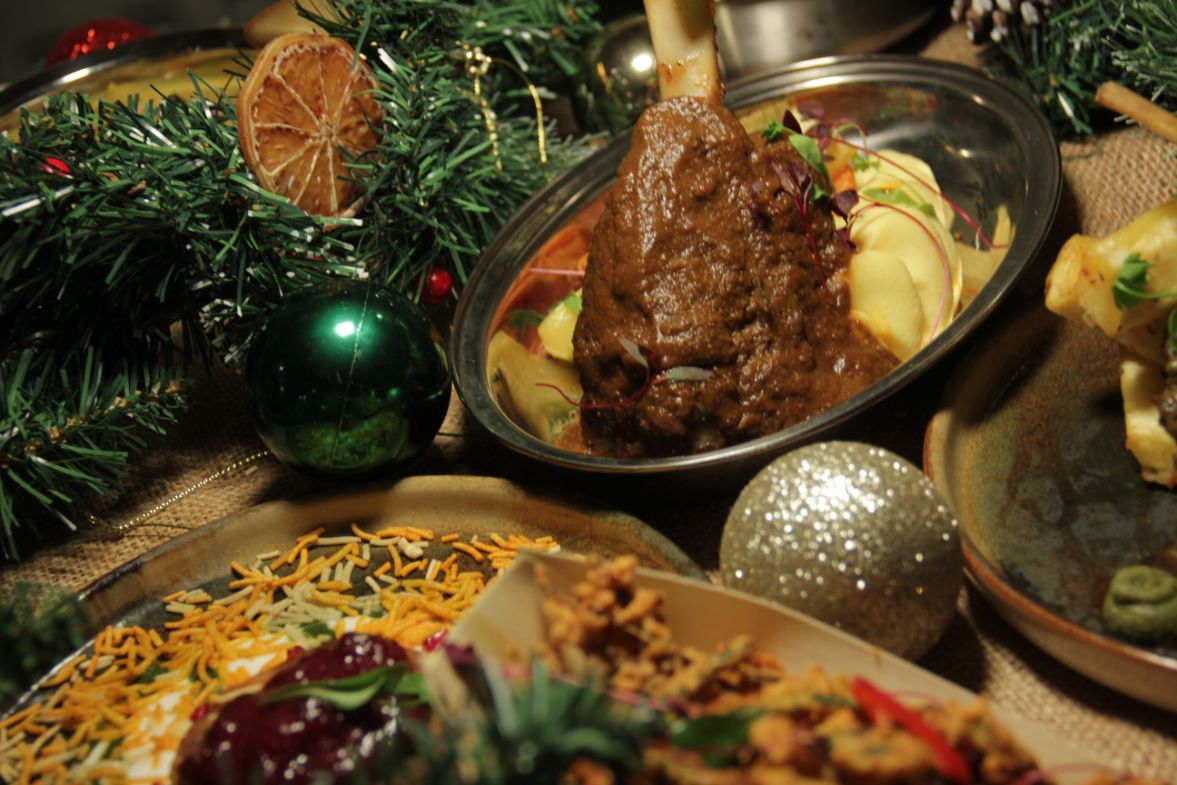
Ammachi Lamb Kozhambu
The word Ammachi evokes the warmth of traditional family cooking.
Ammachi Lamb Kozhambu brings lamb into the South Indian curry tradition, making it an appealing choice for diners who enjoy rich meat dishes.
Pair it with rice or Malabar Parotta for a comforting meal.
Prawn Thengapal Kozhambu
Thengapal means coconut milk in Tamil.
This prawn preparation reflects the importance of coconut-based cooking in parts of South India, particularly coastal food traditions.
It's worth exploring if you enjoy seafood and want something beyond a familiar British Indian curry.
Cauliflower Kozhambu
Vegetarian diners needn't miss out.
Cauliflower Kozhambu shows how a simple vegetable can become the centre of a satisfying South Indian dish.
It's a lovely choice when you're looking for vegetarian Indian food in Jesmond with traditional regional character.
Kozhambu vs Indian Curry: What's the Difference?
Here's where things get interesting.
Kozhambu is a type of curry, but not every Indian curry is Kozhambu.
The word curry covers an enormous range of dishes across India. Kozhambu refers more specifically to a South Indian, particularly Tamil, gravy tradition.
Its flavour depends on the recipe, but tamarind, coconut and regional spice combinations are common influences.
For example, a North Indian butter chicken and a Tamil-style Kozhambu may both be described as curries, yet their ingredients, preparation and flavour profiles can be quite different.
Understanding that difference opens the door to India's regional food culture.
What Should You Eat with Kozhambu?
You don't need an elaborate meal to enjoy Kozhambu properly.
Some of the most satisfying combinations are wonderfully straightforward.
- Steamed rice: A traditional choice that lets the gravy shine.
- Malabar Parotta: A layered bread that pairs well with rich Kozhambu.
- Chapathi: A familiar accompaniment for curry lovers.
- Papad: Adds a satisfying crunch alongside softer textures.
If you're new to South Indian food, start with rice and Kozhambu. It's a simple combination that helps you appreciate the dish's character.
Kozhambu and the Traditional Sunday Sapaad
Kozhambu also has an important place in South Indian feast-style dining.
At Dosa Kitchen, the Sunday Sapaad menu includes both vegetarian and non-vegetarian options.
The Vegetarian Sapaad features vegetable preparations, including Kozhambu, alongside dosa, rice, sambar, rasam, pickles, yoghurt, papad and sweet.
The Non-Vegetarian Sapaad includes Meat or Chicken Kozhambu, Mutton Egg Masala, fish preparations and traditional accompaniments.
For families, it's a lovely way to explore different South Indian dishes without everyone ordering the same thing.
FAQs About Kozhambu
Is Kozhambu always spicy?
Not necessarily. The heat depends on the recipe. Some versions emphasise tanginess, while others are richer or more peppery.
Is Kozhambu vegetarian or non-vegetarian?
Both. Traditional preparations include vegetable-based versions as well as chicken, mutton and seafood varieties.
Is Kozhambu the same as sambar?
No. Sambar is generally a lentil-based preparation, while Kozhambu covers a broader range of South Indian gravies.
Where can I try Kozhambu in Newcastle upon Tyne?
Dosa Kitchen in Jesmond serves dishes including Ammachi Lamb Kozhambu, Prawn Thengapal Kozhambu and Cauliflower Kozhambu.
Experience Traditional South Indian Kozhambu in Jesmond
Kozhambu might be a new word on your menu, but the idea behind it is wonderfully familiar: good ingredients, comforting food and recipes shaped by generations of cooking.
From tangy vegetarian preparations to rich lamb and seafood curries, there's plenty to discover.
If you're looking for an Indian restaurant in Newcastle upon Tyne that explores the flavours of South India, visit Dosa Kitchen in Jesmond.
Come hungry, try something different and discover why Kozhambu holds such a special place at the South Indian table.